The Scenery of Departure
by Laura Millard
September 9 - October 3, 2026
Artist Talk in part with the Canadian Art Hop with Laura Millard and curator Mark A. Cheetham September 24, 7-8 pm.
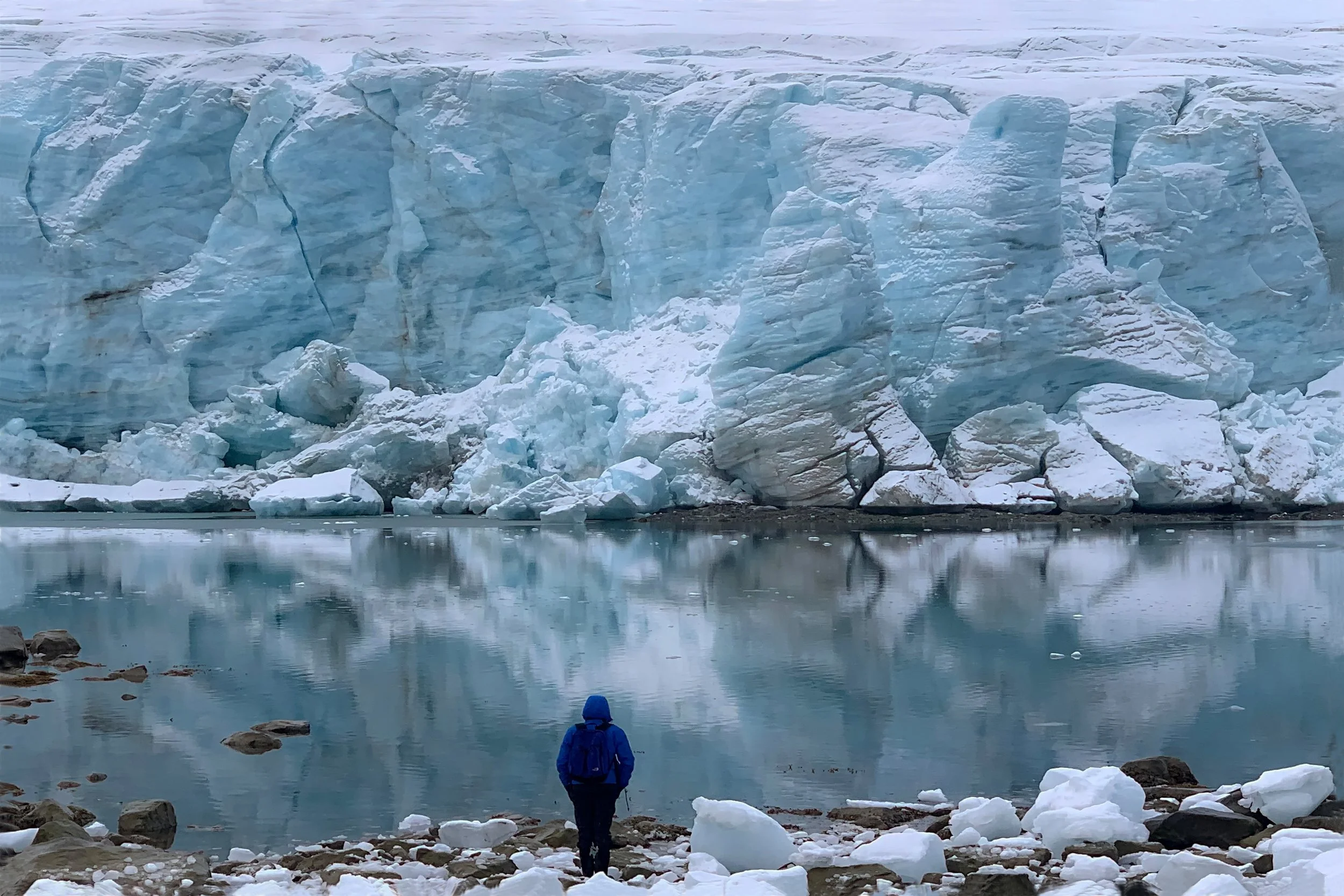
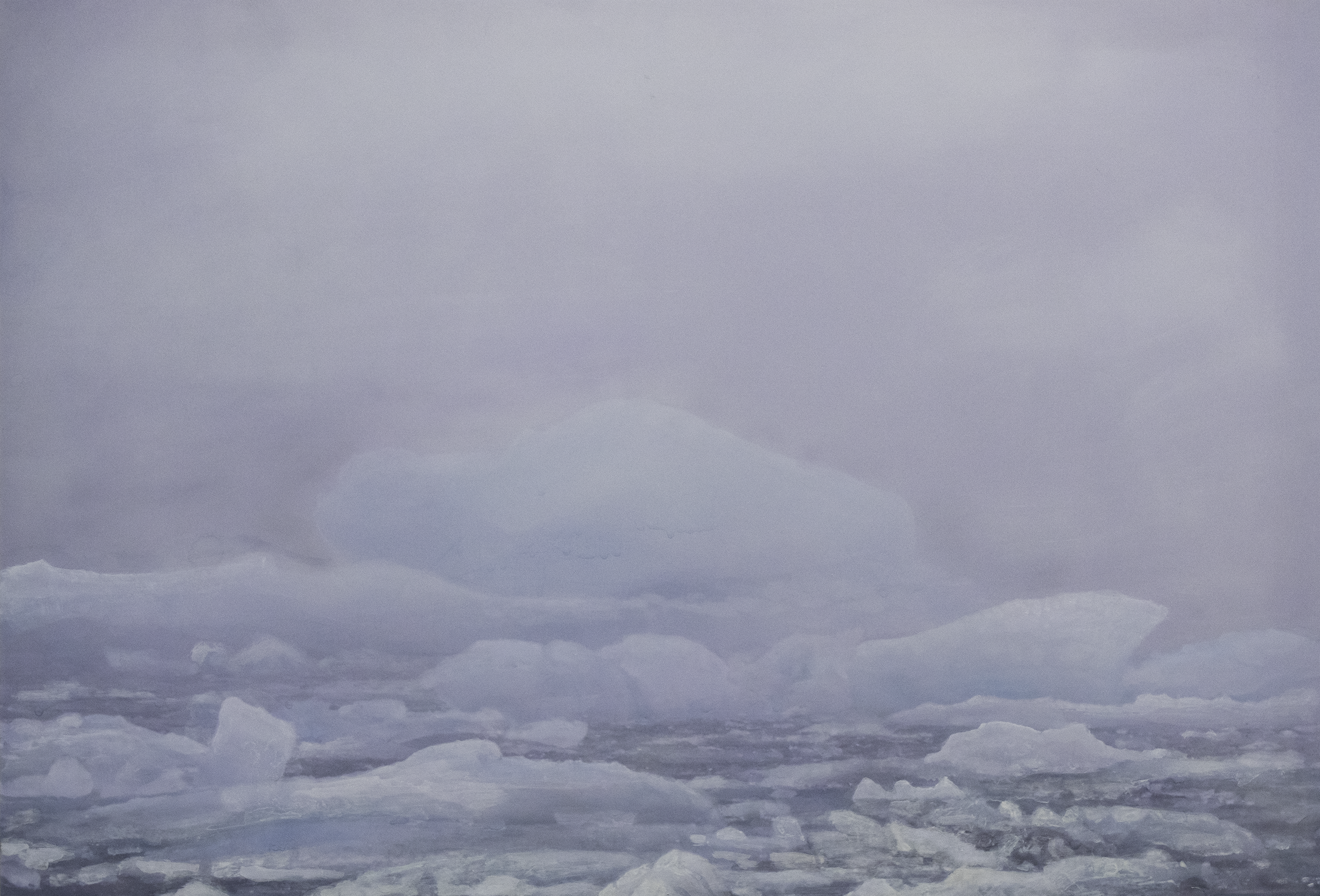
Robin's Song, 27" x 40" x3", (68.5 cm x 101.5 cm x 7.6 cm), water-based inks on recyclable polymer fabric, aluminum frame, LEDs, 2026
Imaging the Edge
82° 00.0452’ N, 009° 42.9076’ E
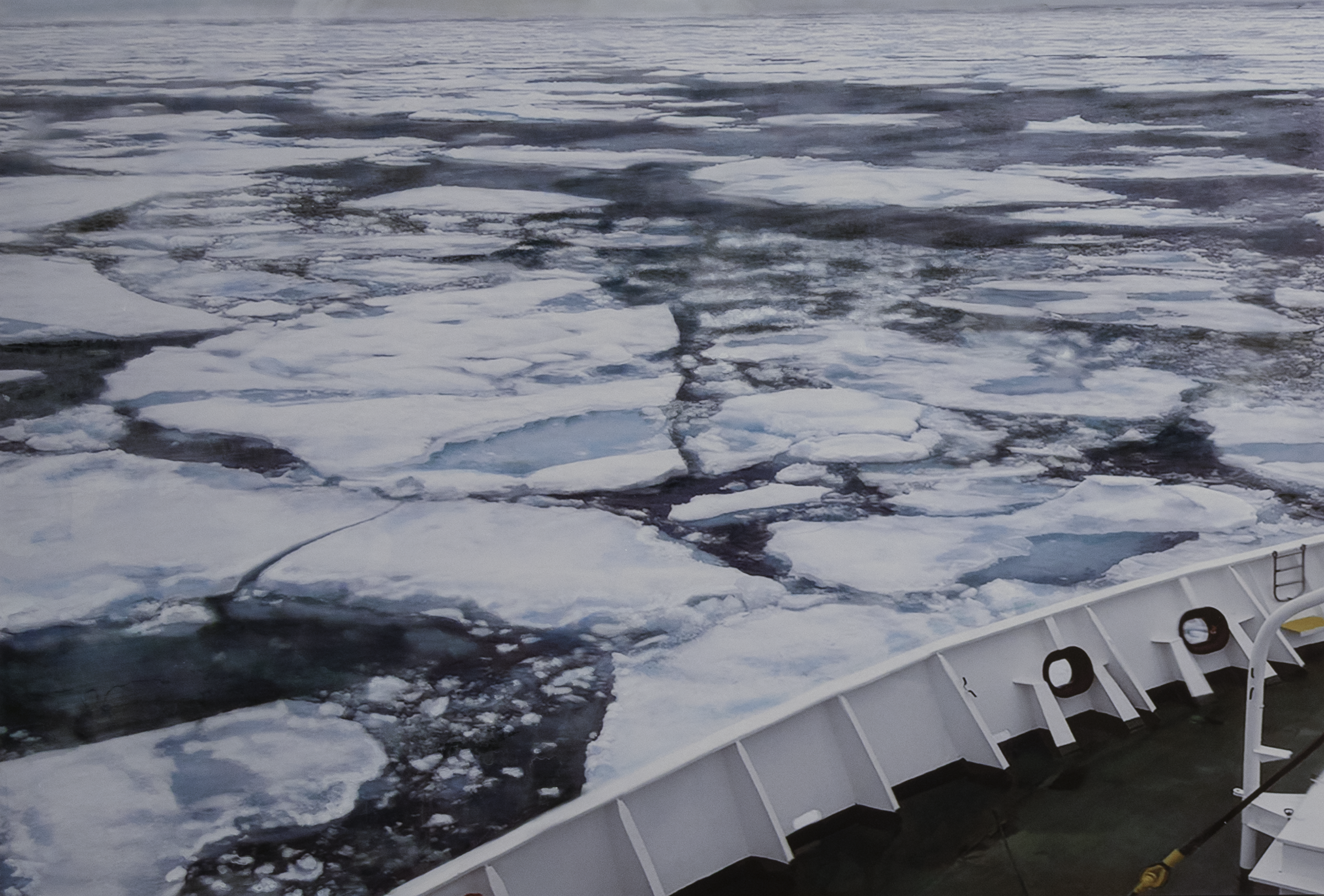
Sitting in my backyard on a sweltering Toronto summer day, I flip through my ship log from the Arctic Circle Alumni Expedition, August 2024. I’m looking for the moment we reached 82° North, our most northerly spot on this trip. At the time I was sure that we’d be hitting thick, solid, multi-year pack ice at this latitude; that we’d arrive at the ‘edge’, the beginning of an always-frozen North. Instead, moving through the wind, rain and fragmented ice drifts, there was no edge. Not since the late 1990’s had solid pack ice been present at this latitude. Moving through shifting ice chunks, some the size of city blocks, this is now a more open sea with loosely drifting floes.
Researching these bearings, I learn that according to the last 48 years of satellite data, 2025 and 2026 show the lowest sea ice extent in recorded history. I also learn that this precise location, directly north of Svalbard, is the hardest hit region of a climate phenomenon called “Atlantification” where warm Atlantic currents push solid pack ice increasingly farther north. Before 2000, Arctic pack ice extended south of 80° and this location would have been buried within multi-year sea ice. Polar Research data from 2021 shows an alarming rate of warming, making this very spot one of the fastest-warming marine environments on Earth. Sea ice is melting from the bottom up, in a self-reinforcing loop, pushing the solid ice edge further north.
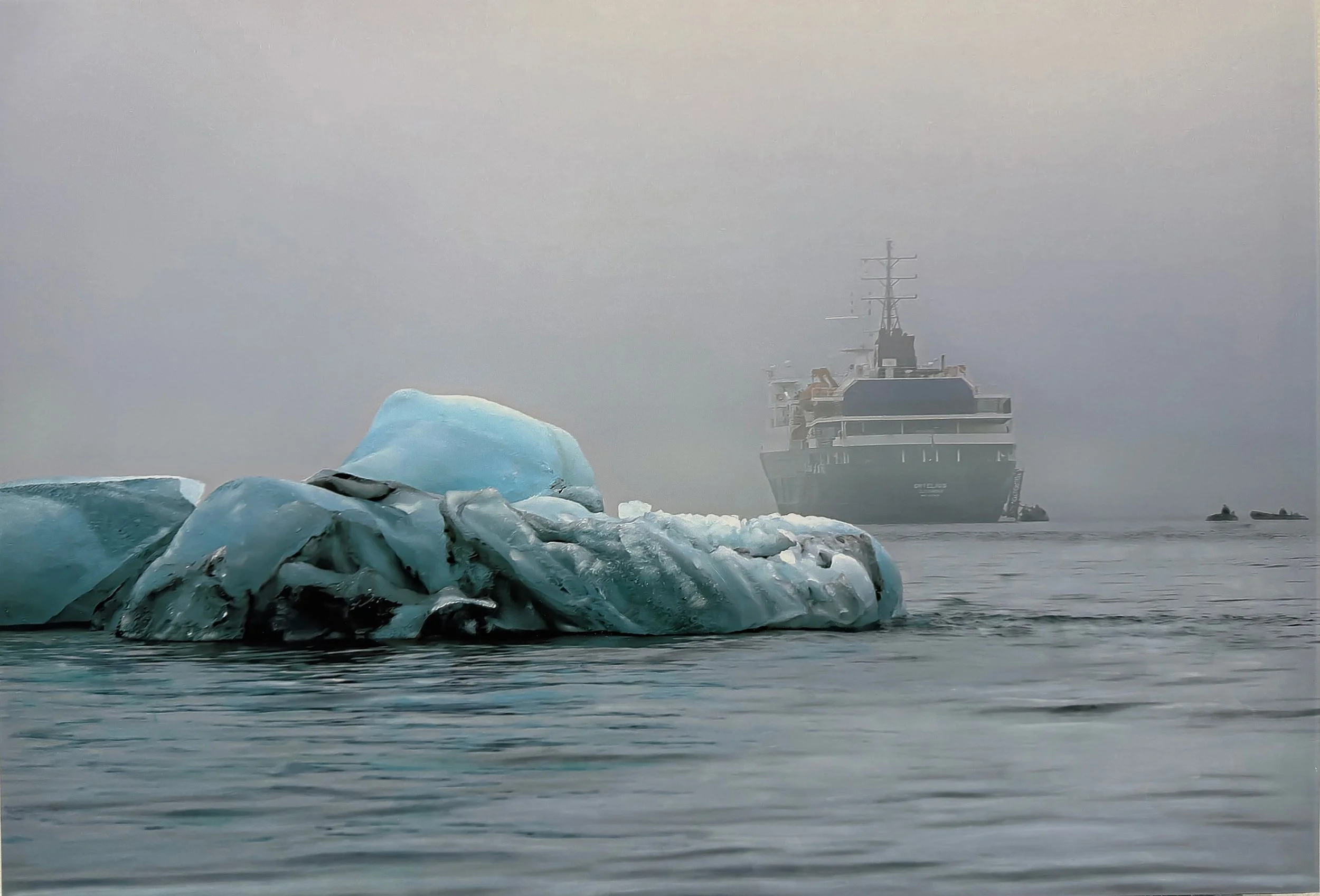
To film the video of this visual / textual work we have called Flow, from the side of our ship, the Ortelius, which originally operated as a special-purpose vessel and scientific research ship for the Russian Academy of Science. The vessel was named Ortelius after the Dutch cartographer Abraham Ortelius who published the first modern world atlas, Theatrum Orbis Terrarum, in 1570 containing 53 maps in his ‘Theater of the World’.
Moving through the flow of rain, water and chunks of ice for hours, I was mesmerized by how the frozen pieces moved like continents, breaking and drifting apart from one another as we passed. It turns out it was Abraham Ortelius who first proposed the theory of continental drift in 1596. It wasn’t until 1912 that Alfred Wegener picked up Ortelius’ idea and developed the Continental Drift Theory and the idea of a once unified continent, Pangaea, that has ever since been breaking, shifting,…drifting ever since.
Floods, fires, droughts; what is the place of visual art in our engagement with the climate crisis? How do we move beyond the sublime, the elegiac, and the ‘grand’ in visual representations of Arctic regions further problematized by colonial histories of scientific expedition and extractive resource depletion in areas now inundated with tourism? Changes we are making on a global scale to our environment are accelerated in the locations I have made this work. In both Canada and Norway, I have focused on visualizing precarious landscapes on the verge of radical change.
My work explores ideas of time and the accelerated change in our environment. I work onsite to gain new perspectives, combining drawing, painting, video, and photography with digital printing as I seek new ways to represent land/place/site. My research is concerned with how landscape representation, through colonial historical precedents, frames a dominant discourse surrounding its representation. My work looks to unframe this discourse and reframe this imagery.
ARTIST’S BIOGRAPHIES
Laura Millard is a visual artist based in Toronto. Millard’s work is concerned with contemporary representations of the landscape that reflect precarious and unstable environments impacted by climate change. Her artistic practice combines drawing, painting, video and photography. She has exhibited in artist-run, commercial and public galleries across Canada and internationally.
Writer and curator Mark A. Cheetham is the author of Landscape into Eco Art: Articulations of Nature since the ‘60s (2018). He curated Struck by Likening (2017), Ecologies of Landscape (2018), Ideas of Far North (2025) and co-curated Arctic Fever: Image and Narrative in North Circumpolar Voyaging of the long 19th Century (2026).
Daniel McNamara is an artist, musician, sound designer and creative technologist from Toronto. He has worked on many projects in sound design and mixing for commercial projects such as National Geographic, Arc'Teryx, Monster Energy. He produces and engineers records, programs software and hardware for interactive audio projects, and designs and fabricates physical interfaces in tandem with music and contemporary visual art.