Bio
Yekta Tarki (she/her) explores the relationship between humans and nature amidst environmental crises through her artistic practice. Her main interest is investigating disasters causes by climate change through research-creation, using art to engage with complex environmental issues. During her MFA at the University of Calgary, she focused on the 2016 Fort McMurray wildfire in Alberta, Canada, exploring the event through paintings, installations, and artist book. Her practice draws on scientific data and research, particularly at the intersection of art, environmental science, and social science, to develop a deeper understanding of her subject matter. In her ongoing project, she investigates the impacts of wildfires, from ignition to aftermath, addressing environmental destruction, biodiversity loss, and the relationship between humans and the natural world. Through different mediums and visual approaches, she aims to raise awareness, encourage community engagement, and foster empathy around the urgent issue of climate change.
Artist Statement
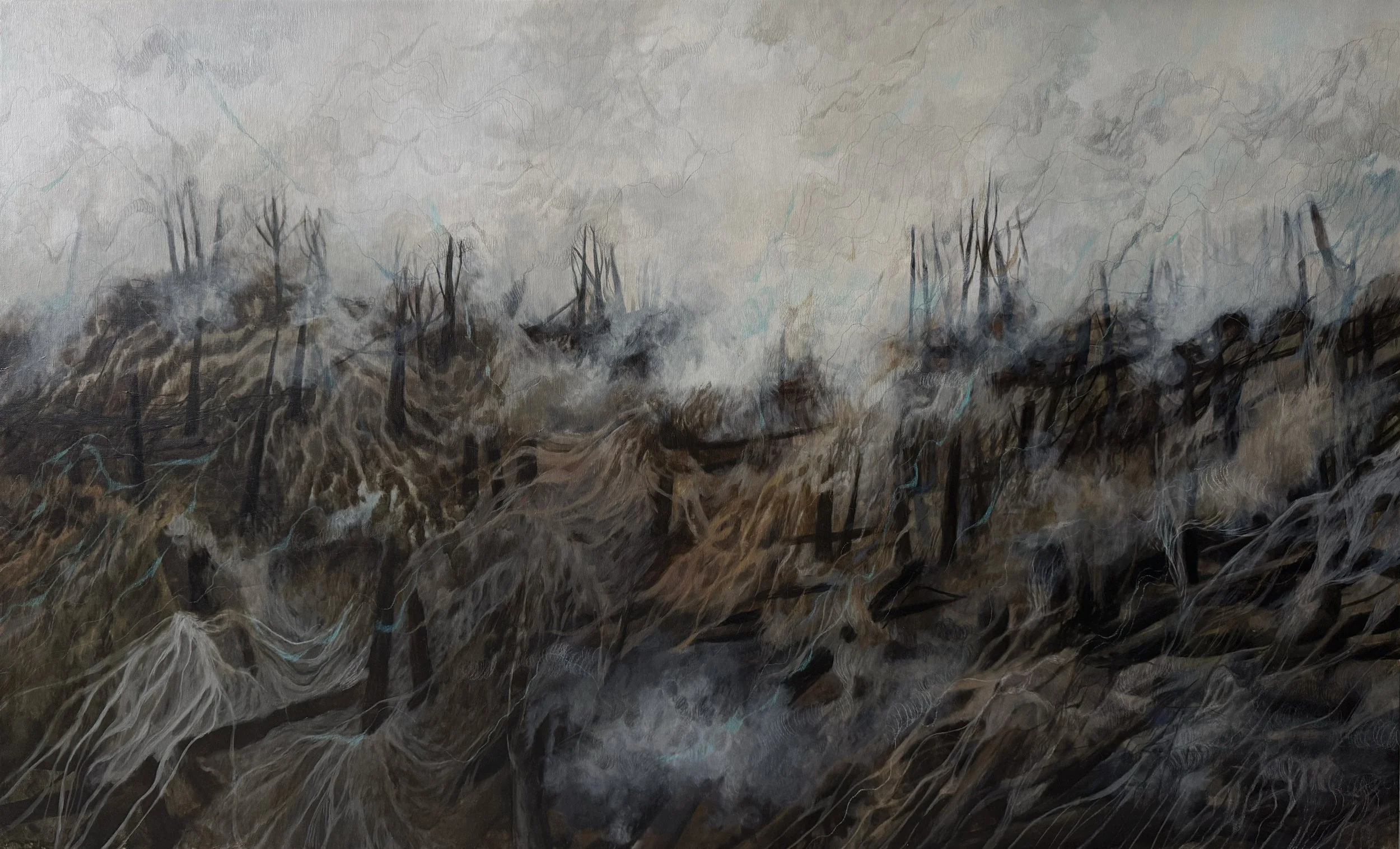
This painting is part of an ongoing series begun in 2023 that confronts and critiques the impacts of climate change through the phenomenon of wildfires. Using the 2016 Fort McMurray wildfire in Alberta, Canada, as a case study, I address the environmental destruction caused by this event. In May 2016, a wildfire ignited southwest of Fort McMurray and, within two days, triggered one of the largest evacuations in Canadian history.
Using abstraction, I represent the wildfire's timeline, from ignition to aftermath, through expressive shapes, lines, and colors. These elements reinterpret the fire, encouraging viewers to observe, imagine, and construct meaning through their own emotional and intellectual responses.
This painting focuses on the post-fire landscape, particularly the moment after the flames have disappeared, when the scale of destruction and the emptiness caused by biodiversity loss become visible. Through layers of colour, shapes, and textures, I portray a charred environment surrounded by ash, smoke, and fog, capturing the transformation of a once-familiar green landscape into a damaged and unfamiliar place.
Focusing on what remains, the work reflects environmental loss, absence, and mourning, inviting viewers to develop an emotional connection with the damaged environment and consider the lasting consequences of wildfires.