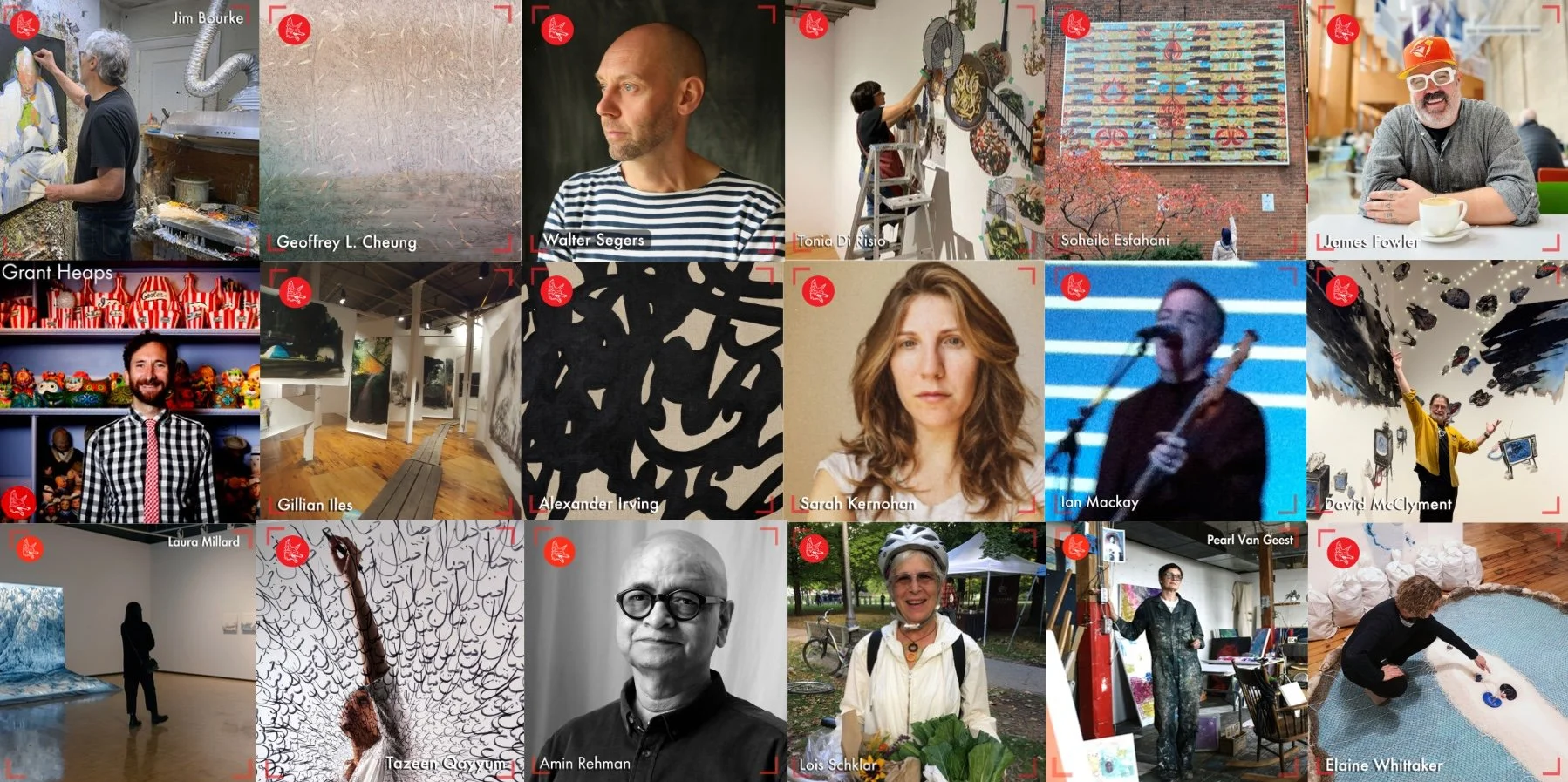
TAZEEN QAYYUM: HOW TO TRACE A PATTERN
Curated by Sarah Quinton, Independent Curator and Curatorial Director Emeritus, Textile Museum of Canada.
November 4 - 28, 2017
Opening reception: Saturday November 7, 2-5 pm.
The artist will be present in the gallery on November 7th, 14th, 21th, and 28th during gallery hours and may accommodate viewings on request outside gallery hours.
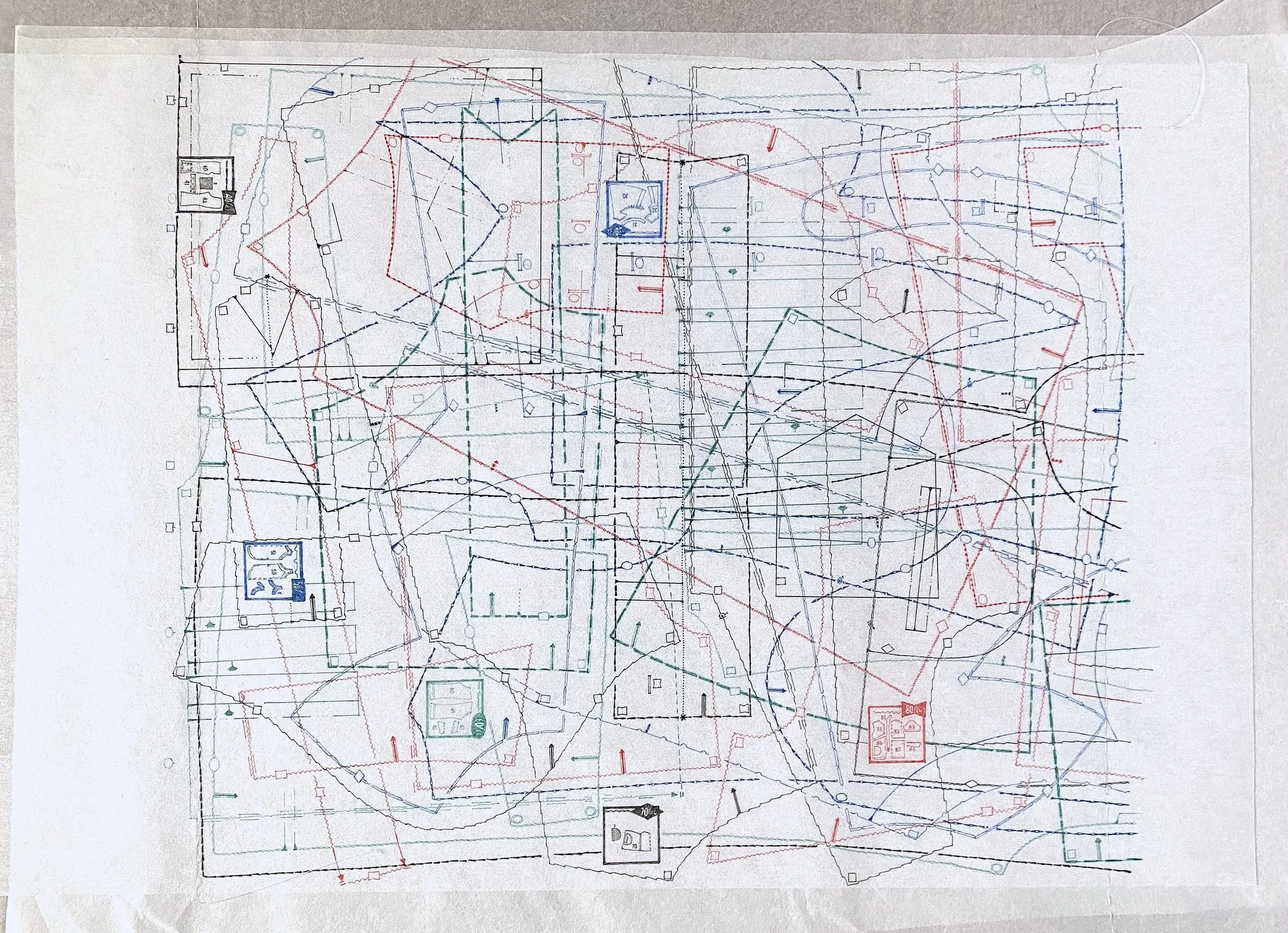
In How to Trace a Pattern, Tazeen Qayyum investigates the language of textiles through clothing design, domestic sewing practices, and the circulation of globalized patterns across generations within her family lineage.
As a young girl in Pakistan in the 1970s, Qayyum wore clothes sewn by her mother using European dressmaking books featuring blonde, fair-skinned children. Western children's fashion became a fixture of family life, and her mother carefully assembled sketchbooks filled with sewing notes, magazine clippings, fabric samples, and design ideas. Decades later, Qayyum, a Pakistani-Canadian multidisciplinary artist who immigrated to Canada in 2003, returns to this family archive of dress patterns and sewing manuals, including a collection of her childhood garments, stirring memories and deepening an already rich connection with her mother, Shaheen Qayyum.
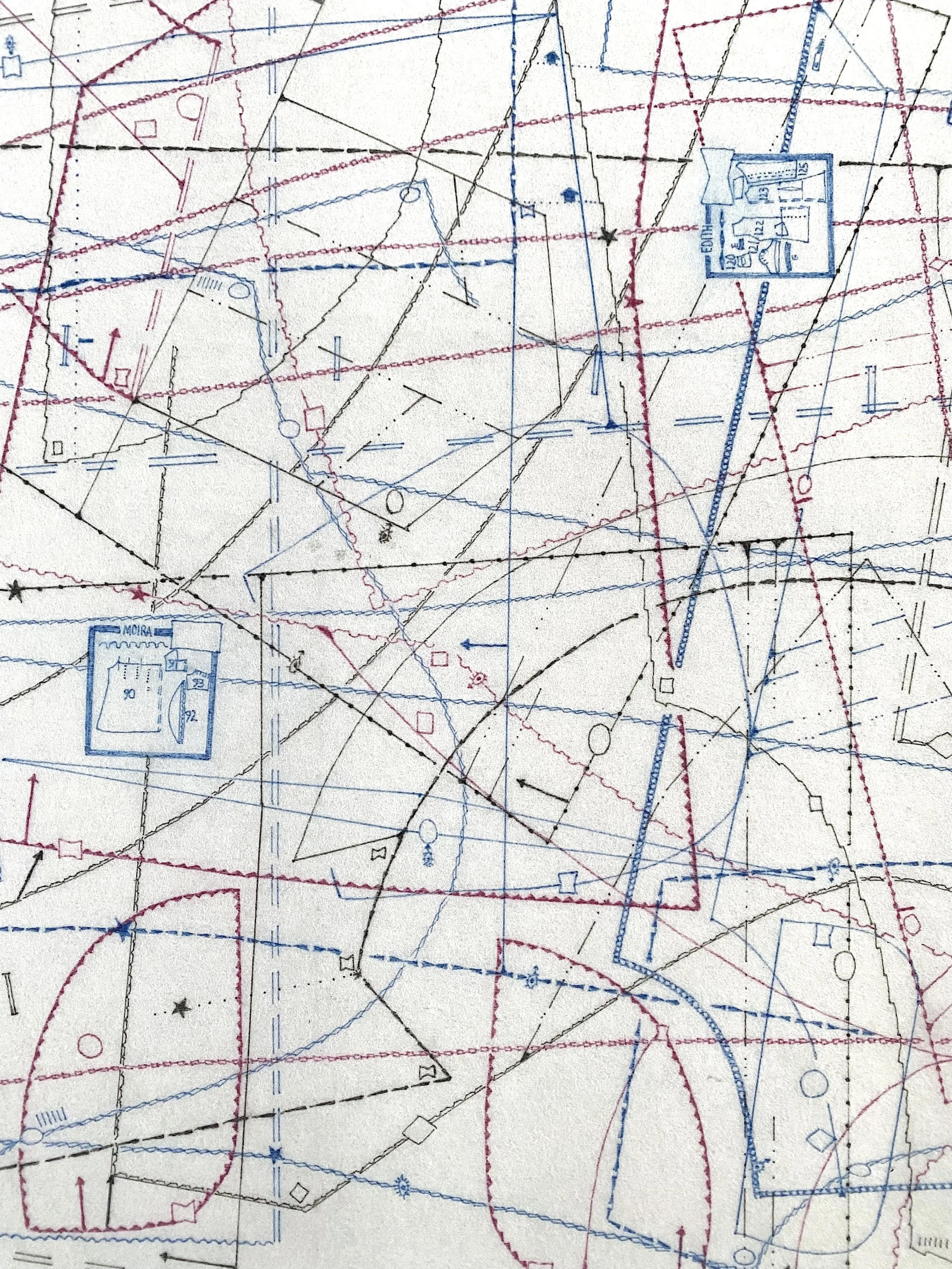
Drawn to the architecture of lines, curves, and angles found in these original pattern pieces, Qayyum transforms functional shapes into complex abstract compositions. In her Tracing Pattern Series she builds densely layered visual fields that resemble maps, blueprints, and coded systems. The drawings are made on interfacing, an essential structural fabric hidden inside tailored garments. By bringing this unseen material to the foreground, Qayyum highlights an overlooked participant in the making of clothing and memory.
The exhibition's paintings are executed using traditional South Asian and Persian miniature painting techniques, demanding extraordinary precision and patience. A series of three works, titled after names printed on commercial pattern envelopes, such as Alison, John, and Harold reproduces idealized images of blonde, curly-haired children that served as promotional models for the clothing her mother made. Such mainstream Eurocentric beauty ideals, of course, prevail throughout the world, resonating across generations.
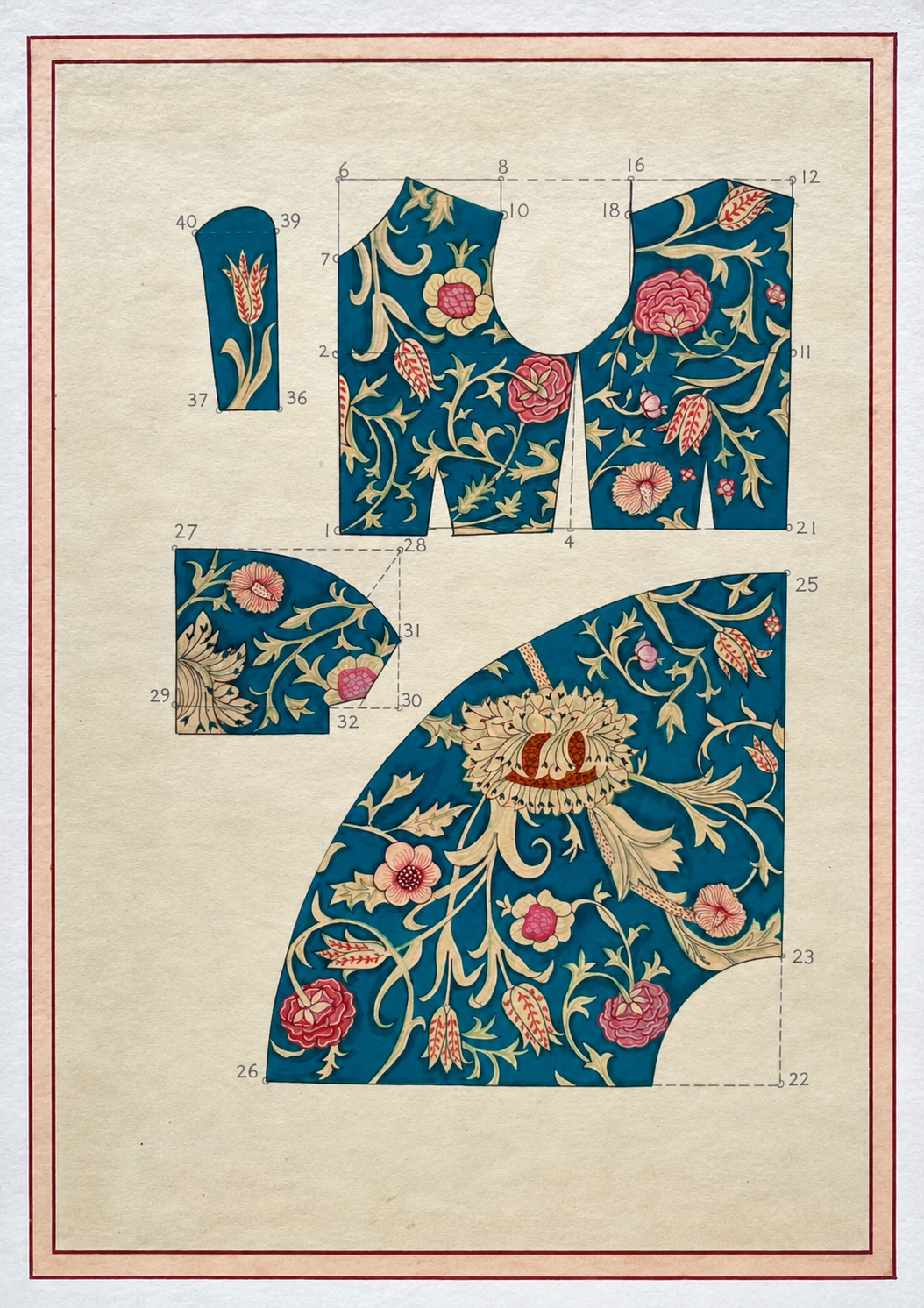
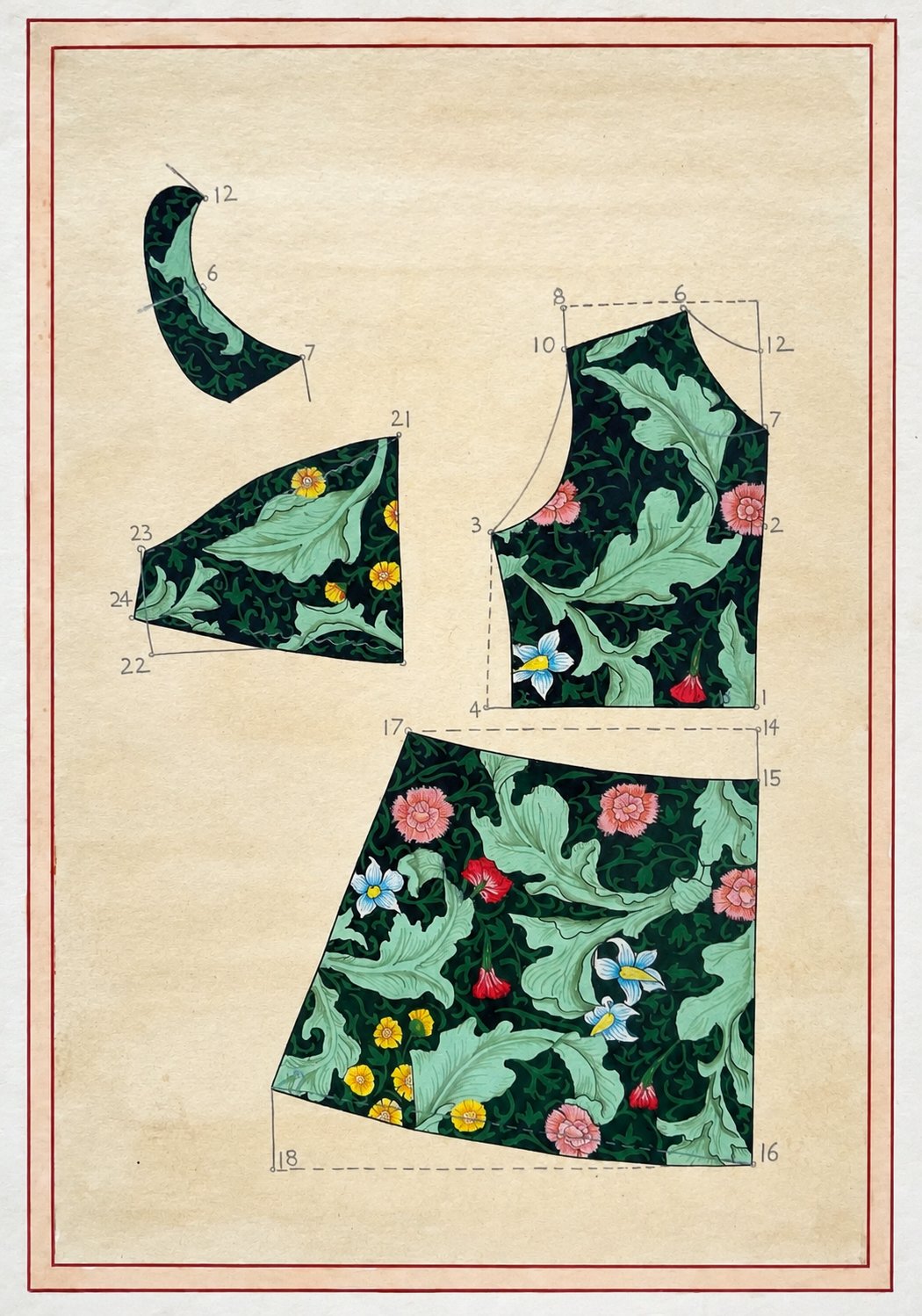
A second series of paintings, Easy Cutting, extends the artist's critique more pointedly to the floral designs of British designer William Morris (1834-1896), whose work has been criticized for appropriating motifs originating in Indian chintz traditions. In a gesture of reclamation, Qayyum uses a traditional squirrel-hair miniature-painting brush to meticulously copy Morris's floral designs onto tiny Western garment templates, reclaiming visual forms shaped by histories of colonial exchange and cultural extraction.
Through these acts of recuperation, the artist reverses the flow of cultural appropriation: Qayyum reasserts the South Asian origins of these motifs and reveals the colonial histories embedded within seemingly innocent patterns and garments. Her work challenges the dynamics through which Western culture has often been presented as universal while obscuring the non-Western sources from which it drew inspiration.
Sarah Quinton
Independent Curator and Curatorial Director Emeritus, Textile Museum of Canada
ARTIST BIOGRAPHY
Tazeen Qayyum (she/her) is a Pakistani-Canadian, multidisciplinary artist based in Oakville. Trained as a miniature painter of South Asian and Persian traditions, Qayyum continues to explore new materials and processes through drawing, installation, sculpture, video and performance. Her work addresses complex issues of belonging, identity, and displacement within a socio-political context, emphasizing empathy and compassion as a counterforce to aggression and conflict while acknowledging the evolving realities of our time.
Qayyum's artwork has been exhibited globally at prestigious galleries, museums, international art biennials and festivals, including the Karachi Biennial 2017, the Bangkok Art Biennial 2022, National Museum of Qatar in 2024 and the Edinburgh International Festival 2025. Her works are part of esteemed collections such as the Royal Ontario Museum, the Aga Khan Museum, Canada; the Art Mill Museum, Qatar; the Robert McLaughlin Gallery, Oshawa; the TD Canada Trust Permanent Collection, Toronto; the Welt Museum, Vienna; the Doris McCarthy Gallery at the University of Toronto; the National Gallery of Amman, Jordan; and the National Art Gallery, Nepal.
Qayyum co-founded Art Address, an interactive space in Oakville dedicated to fostering artistic discourse, community building, and mentoring emerging and newcomer artists in Canada.
The artist would like to acknowledge and express heartfelt gratitude to curator Sarah Quinton, artist Sophia Kim, her family and the Ontario Arts Council for their support in making this exhibition possible. A special thank you to her mother, Shaheen Qayyum, for lovingly preserving and sharing all the cherished objects and memories, and for her unwavering love and care.