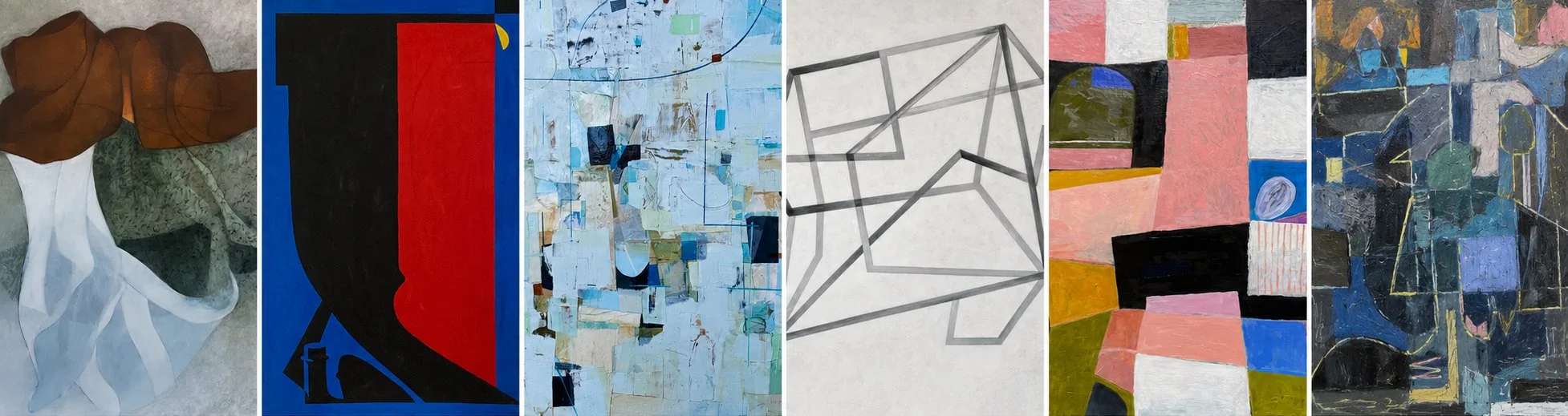
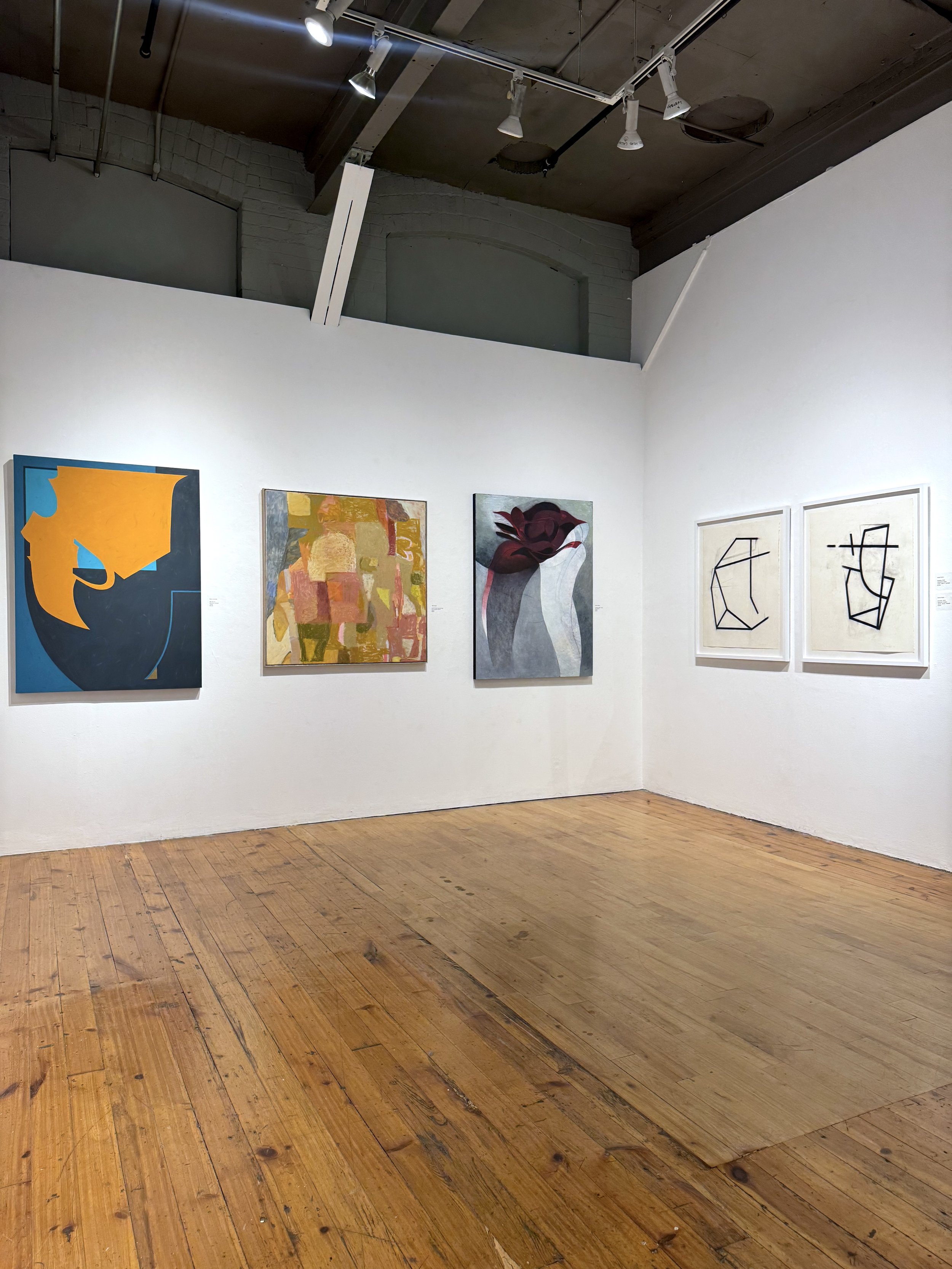
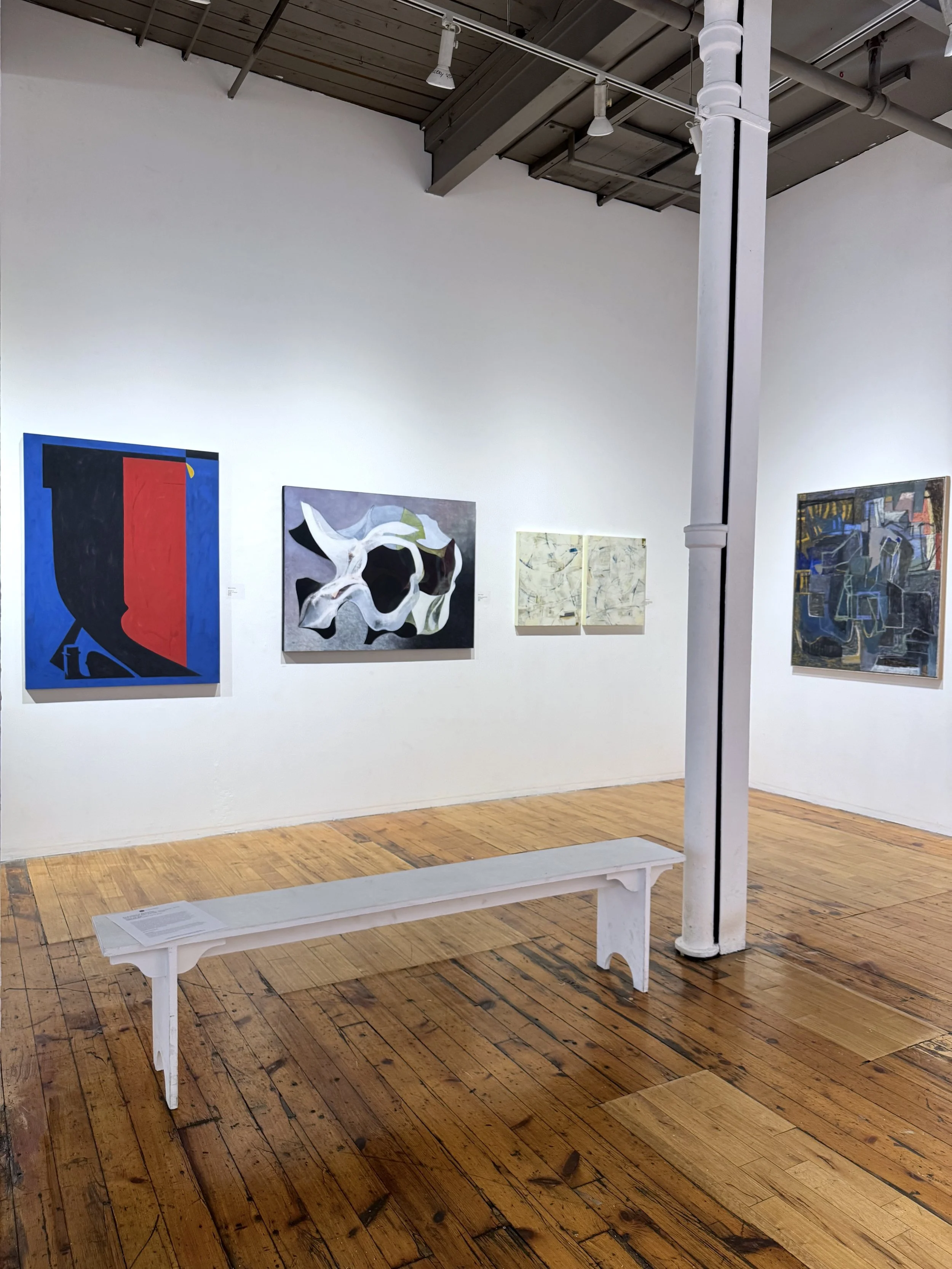
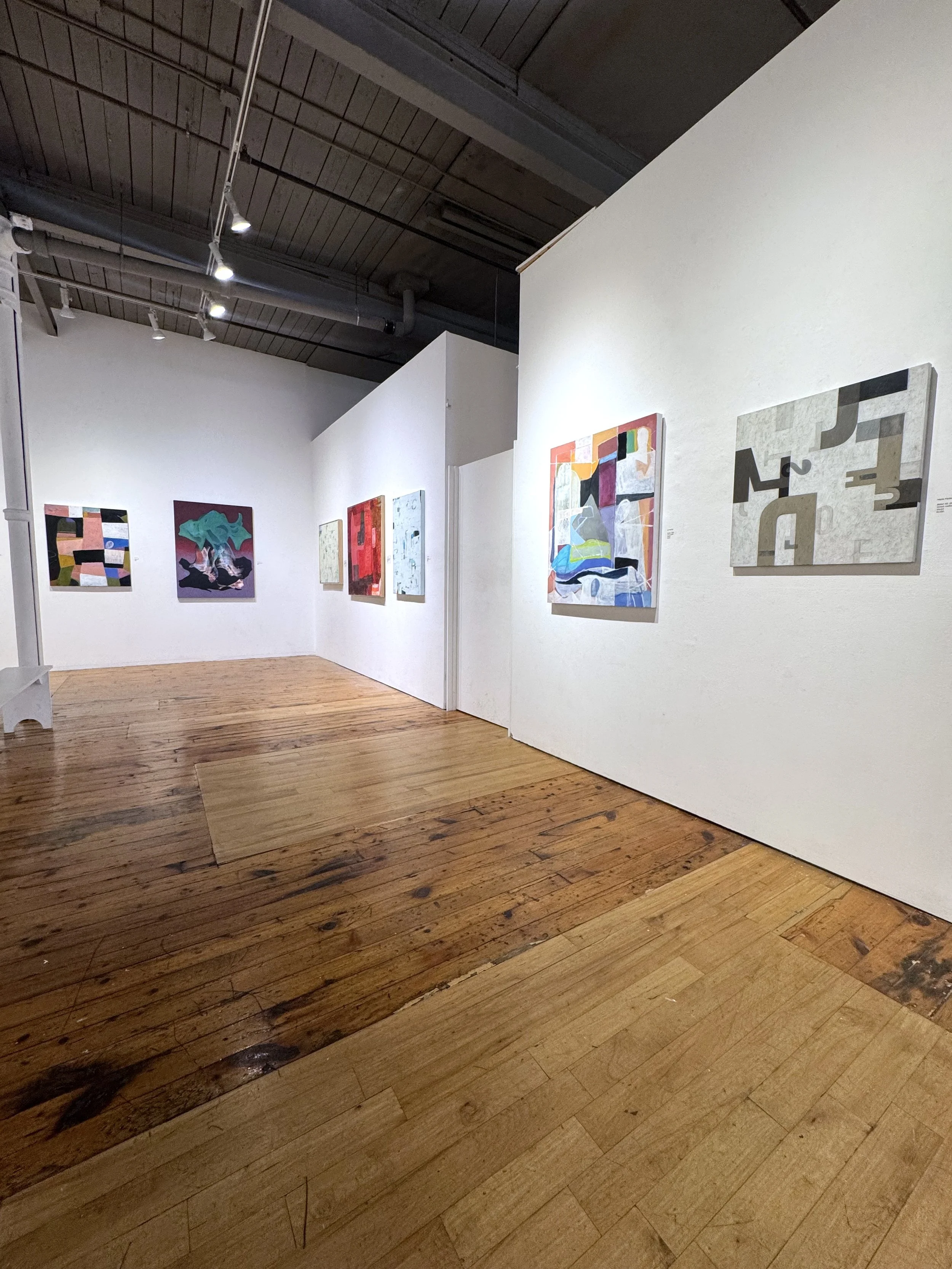
Artists from left to right: Peter Kirkland, Barry Coombs, Janice Kovar, Marla Panko, Ian Mackay, and Jody Joseph.
Six Positions in Abstraction
Peter Kirkland, Barry Coombs, Janice Kovar, Marla Panko, Ian Mackay, and Jody Joseph.
August 5-22, 2026
Opening Reception: Saturday, August 8, 2-5 pm
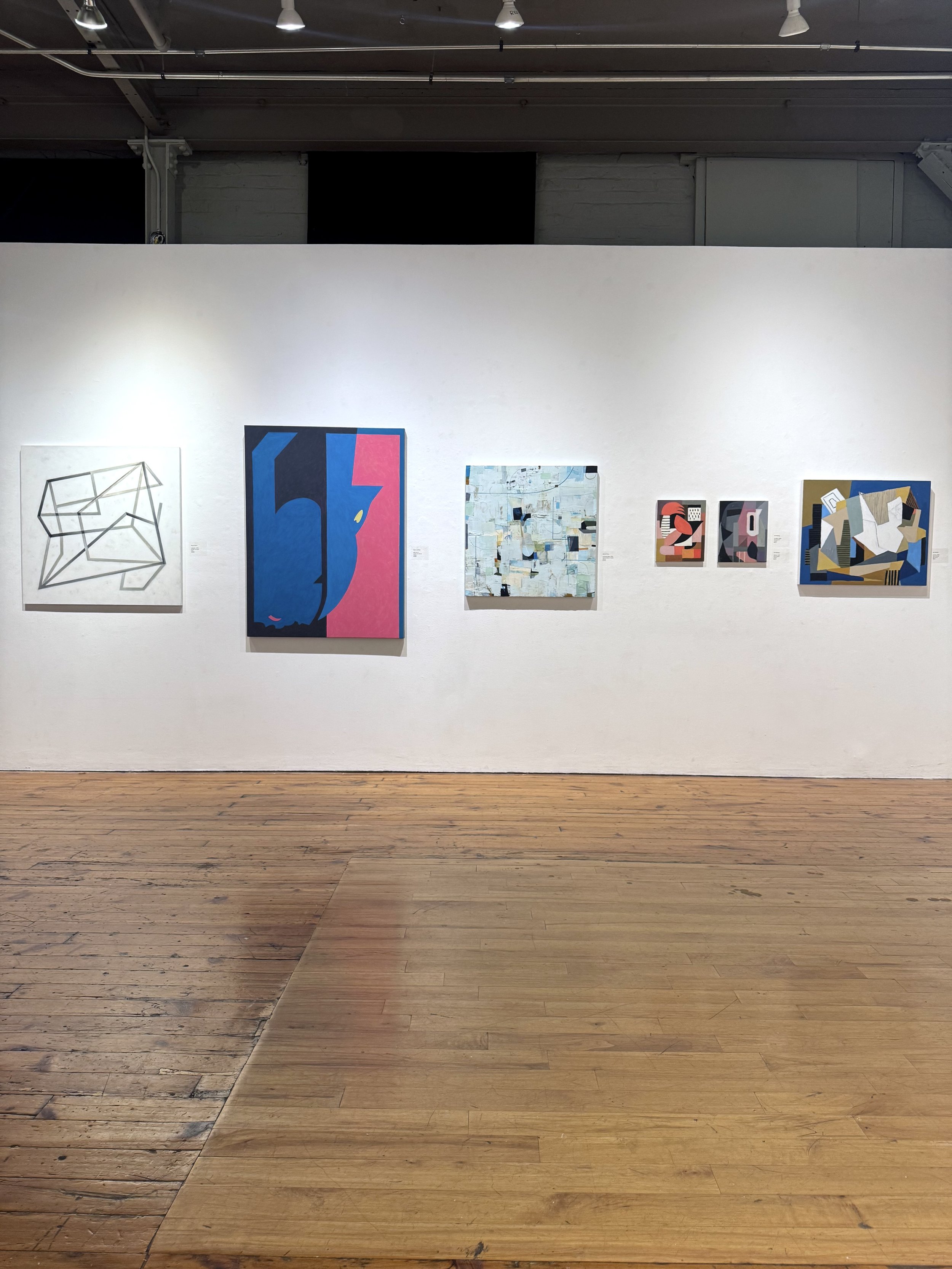
Six Positions in Abstraction brings together six established painters from the western edge of Lake Ontario whose long-running practices now meet at Red Head Gallery. Hosted by gallery member Ian Mackay, the exhibition welcomes Barry Coombs, Jody Joseph, Peter Kirkland, Janice Kovar, Marla Panko, and Ian Mackay as equal participants in a shared conversation about what abstraction can do—formally, materially, and emotionally. Across the group, approaches range from gestural immediacy and rhythmic mark-making to calibrated geometry, layered spatial constructions, and attentive surface work. Each artist brings a distinct visual language, developed through decades of sustained studio inquiry, yet the works resonate through their common investment in colour, structure, and the expressive potential of paint. Rather than proposing a single definition of abstraction, the exhibition presents six complementary positions that explore how meaning emerges through process, perception, and the interplay of control and improvisation. In the artist-run context of Red Head Gallery, Six Positions in Abstraction underscores abstraction as a living language—plural, contemporary, and strengthened through collective exchange.
ARTIST STATEMENTS
Peter Kirkland
Peter Kirkland's paintings evoke physical memories by presenting quasi-biomorphic forms existing without a shallow three-dimensional space. The paint surface is extensively worked and disrupted, with alternating layers either built up of transparent glazes or vigorously cancelled out by sanding or scraping, resulting in a sort of palimpsest that is intended to form an internal narrative record of the painting's development
Barry Coombs
An early exposure to existential thought has had a lasting influence and the concept of the Cosmic Joker endures with me. Nature, mortality and the paradox of time are recurring preoccupations. Everything, however, begins with observation and an attentive encounter with the visual world. A fleeting cast shadow can become an object of contemplation, investing the ephemeral with grace. Through geometry and colour, the seemingly mundane moment may become a site of wonder, where the magical quietly reveals itself.
Janice Kovar
Janice Kovar’s paintings explore Hamilton from the threshold of how city and landscape meet. Through layered colour texture, and surface, I hold industry and architecture beside the organic rhythms of land and growth. I’m drawn to that liminal space — the tension, overlap, and quiet transition between the built and the natural. The work traces Hamilton’s dual character: steel edges softening into green, structure giving way to movement. It’s about how a city and its landscape inform each other, and how that relationship shapes our sense of place.
Marla Panko
Marla Panko is interested in the nature of modernity, the archetypes of shared culture, and how we interact with an uncertain world in flux. The work is an effort to make visual sense of this, and is driven largely by questioning and curiosity. Visually rooted in geometric formalism, it leans heavily on the pure use of line, shape and space. Controlled compositions aim to express both stability and instability through the interplay of flatness and dimension, stillness and movement, simplicity and complexity. Within this focus, I aim to create a unified elegance of meaning and form.
Ian Mackay
Ian Mackay’s paintings marry precise design with playful ambiguity. His visual vocabulary of flattened forms, floating shadows, and biomorphic figures suggests both mid-century modernism and contemporary conceptualism. Mackay’s work is simultaneously formal and subversive—inviting viewers into a layered visual game of structure, wit, and invention.
Jody Joseph
Jody Joseph’s work emerges through a process of layering, concealing, and revealing. Often rooted in a sense of place—whether real or remembered—her abstract surfaces suggest both landscape and interiority. The paintings carry the rhythm of lived experience, weathered and softened by time, and invite quiet emotional reflection.