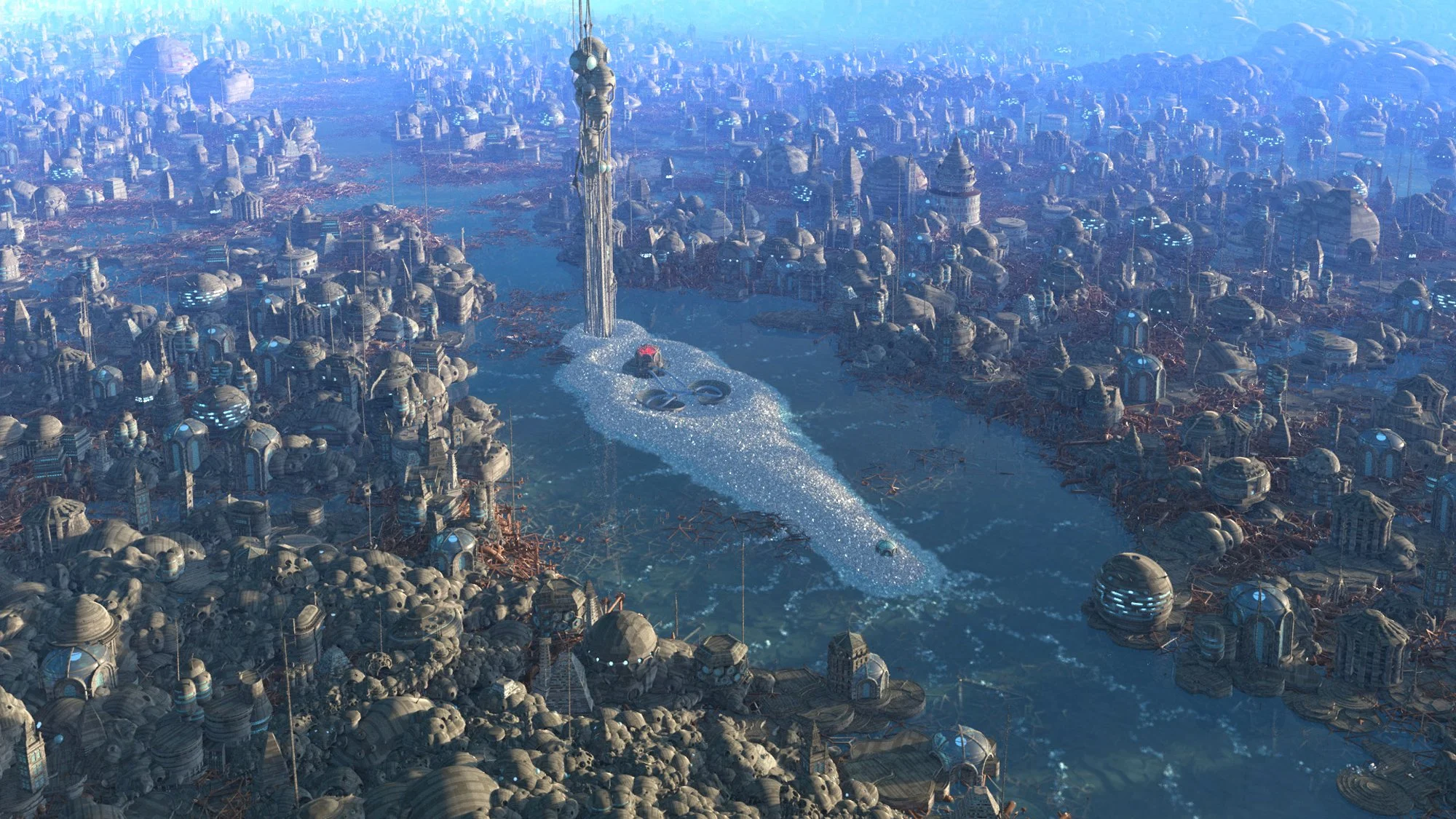
Super Tide, Mathew Borrett & Elaine Whittaker
CUM GRANO SALIS
March 4 - 28
Opening Reception: Saturday, March 7, 2 – 5 pm.
Elaine Whittaker with participating artists Mathew Borrett, Teri Donovan, Tracy Gorman, Kelley Aitken, Kaz Ogino, Heidi Breier, Kat Honey, Kai Kan, Kim-Lee Kho, and Jim Nason.
Cum grano salis (Latin for ‘with a grain of salt’) is an expression of skepticism. In an era saturated with images, data, and competing truths, the potential for exaggeration and distortion is greater than ever. Doubt is integral to how we perceive and interpret the world today. We move continuously between trust and mistrust, truth and fabrication, constantly pausing to reassess what we have just seen, heard, or absorbed.
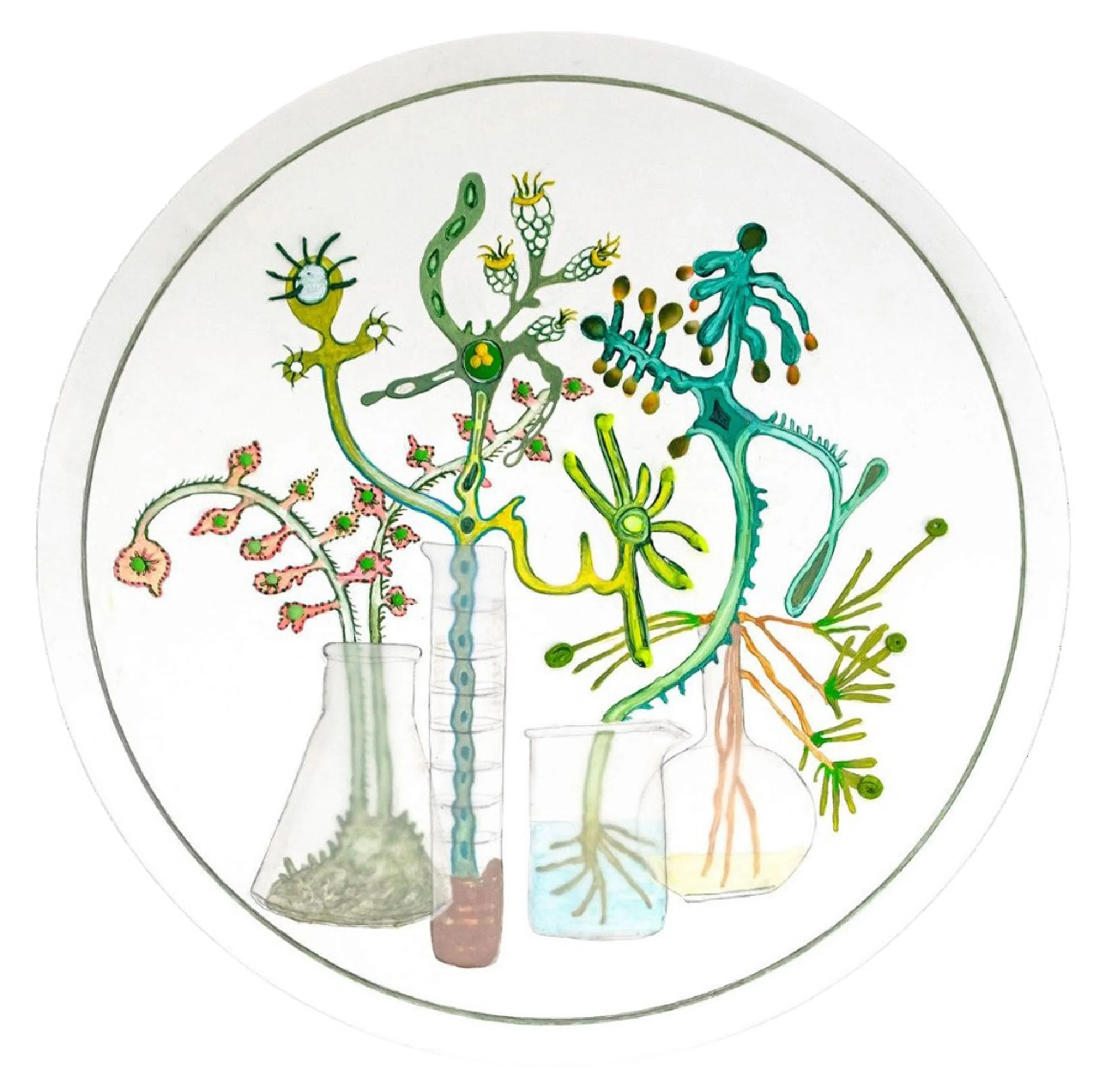
Fresh From the Lab 1, Teri Donovan
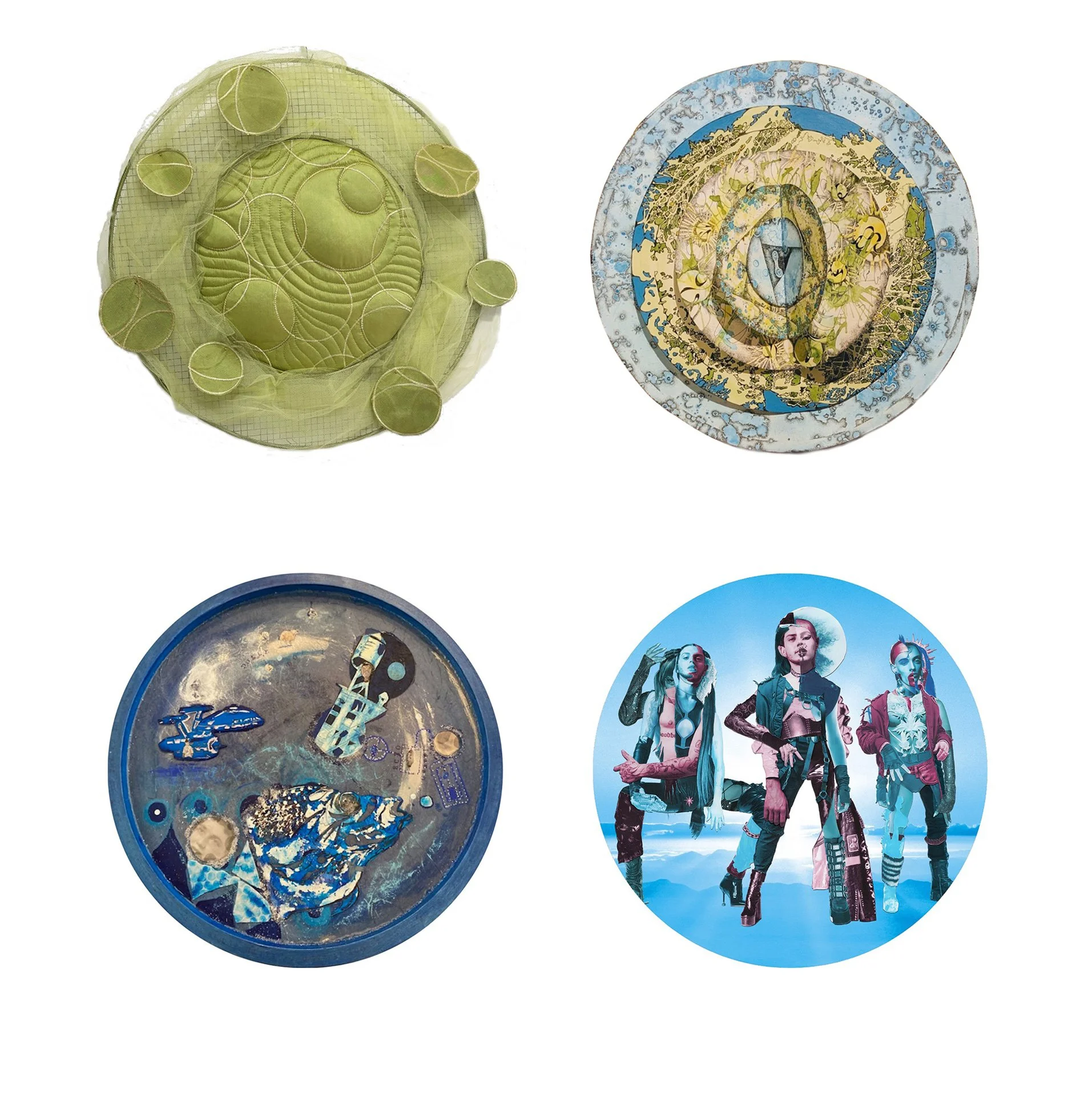
From left to right: Trapunto, Tracy Gorman. The Three Body Problem Saga, Kaz Ogino. Mothership, Jim Nason. Transcenders, Kat Honey.
Cum Grano Salis invites viewers to enter a constellation of speculative worlds in which uncertainty is not an exception but a condition. Across installations, video, and mixed media artworks, Elaine Whittaker both curates and collaborates with ten artists to imagine what forms of life, survival, and coexistence might emerge on a rapidly changing planet. Drawing on depictions of climate change in speculative and science fiction, the artworks unfold through narrative, atmospheric, and embodied experiences. The changes are not a distant abstraction but something we now feel, inhabit, and negotiate.
The exhibition is a story of three interwoven galaxies—distinct yet interconnected—fantasy and scientific inquiry converge. Viewers move between our Milky Way galaxy and two fantastical ones, encountering altered ecosystems and technologies. Adaptations blur the boundaries between the plausible and the imagined. Dystopian and utopia impulses intersect. This is what Margaret Atwood terms ‘ustopia’— a fragile balance where loss and possibility coexist, shaped by new forms of cooperation.
In placing climate change and planetary changes within speculative and fictional frameworks, Cum Grano Salis opens space for emotional, poetic, and critical engagement. The exhibition encourages viewers to consider how imagination, storytelling, and world-building might help reframe our understanding of environmental instability and change our relationship to our planet.
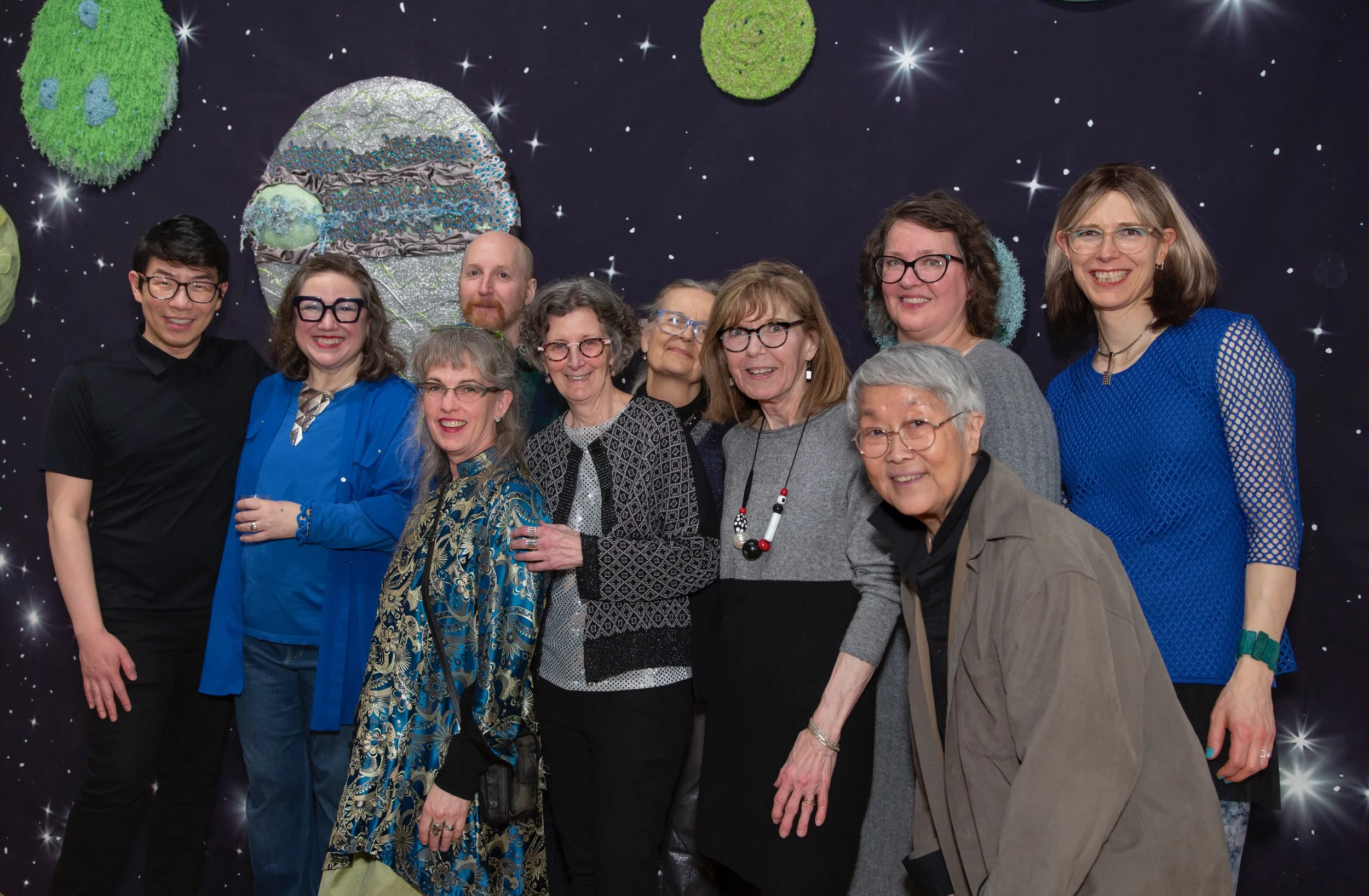
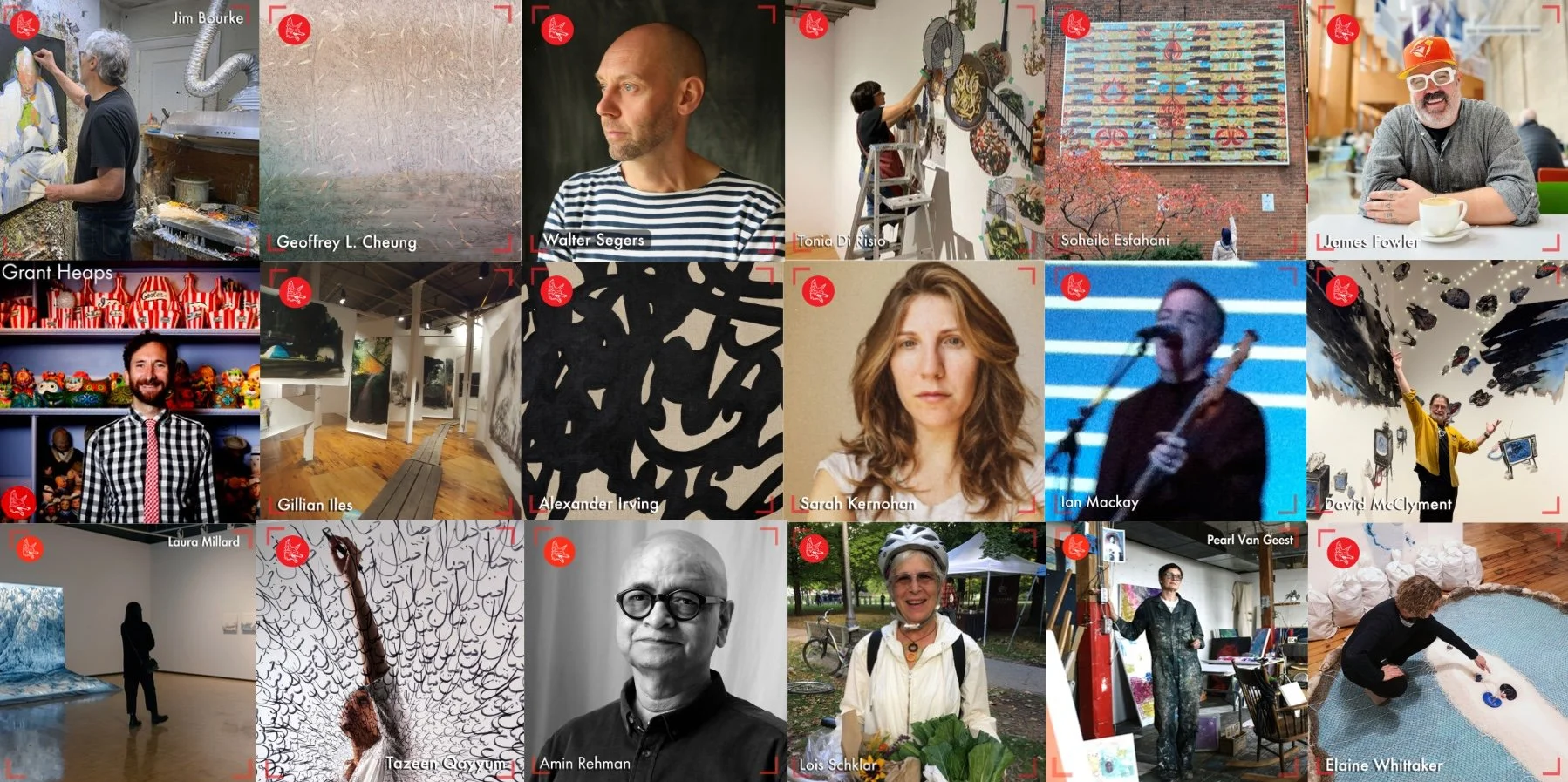
Artist Group Image at the Opening Reception of CUM GRANO SALIS, March 7, 2026. Photocredits to David Williams.